"You fill it for forty years. Then, to actually use it, you have to smash the piggy bank."
October 28, 2026
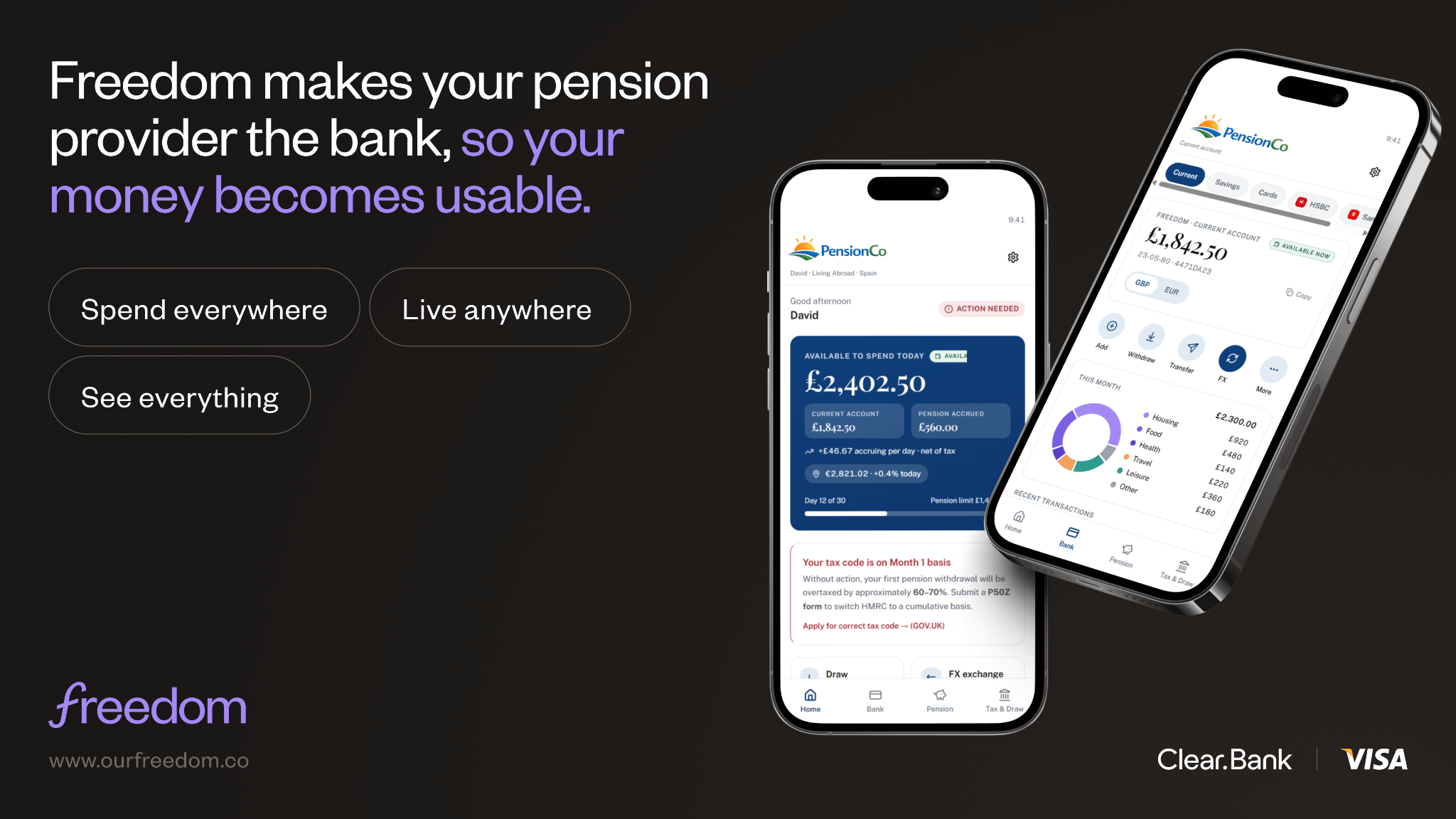
That was the line that opened our pitch at Visa's European headquarters last week. We had 90 seconds and one slide, in front of a room of fintech and industry experts. Tabitha delivered it without a script, and the conversations it started carried on long after she'd left the stage.
The 90 seconds on stage were the easy part. What's more useful is what it took to get there. Cutting a decumulation proposition down to 90 seconds taught us more about how our industry explains the move from saving to spending than any strategy document we've written.
Six weeks, then 90 seconds
Freedom was one of 25 fintechs selected for the sixth cohort of the EY FinTech Growth Programme. Over six weeks, from mid-September to late October, EY took us through the questions every scaling fintech has to answer: tax and team, regulatory licensing, fundraising and investor expectations, international expansion and AI.
Each of those sessions pulled us towards detail. The final week did the opposite. The showcase gave every company 90 seconds and one slide to say why it should exist.
For a business built on pension decumulation, embedded banking and regulated infrastructure, that's a brutal brief. Here's what we learned from it.
1. You can't explain the solution in 90 seconds, so don't try
Our first drafts tried to describe the product. Every version ran out of time halfway through the how.
What changed was accepting that 90 seconds isn't for the solution. It's for one problem, said so clearly that the room recognises it. Then it's for one reason to come and find you afterwards. The pitch didn't have to close anything. It had to start the conversations that happened over drinks.
The problem we chose was a simple one. People save into a pension for decades, and then the only way to use that money is to take it out. Last tax year, more than £91bn left UK pensions, according to the FCA, up 21.7% on the year before. Every pound of it had to leave before it could be spent
2. Cut what the audience doesn't need, even the things you're proud of
We're proud of our partners, and for any fintech, naming them is the reflex. In 90 seconds, it costs you a sentence the audience doesn't need. So we didn't mention them at all. Their logos sat on the screen behind the speaker, and the room read them in a glance.
The same rule took out a lot more. A metaphor that was one too many. A sentence that relied on a claim the room would want to check. Lines that sounded good but said nothing new. The script got shorter with every round, and clearer each time.
The test for every line became: does the person in the third row need this to understand the problem? If not, it went on the slide or got cut.
3. Delivery is part of the message
We made an unusual choice about who would pitch. It wasn't a founder or an executive. It was Tabitha, who is decades away from drawing a pension herself. When someone who has never thought about retirement explains the problem simply, the room believes the problem is simple. It also makes it hard to hide behind jargon.
Then we rehearsed. We filmed early run-throughs and went through them line by line: where the pace dropped, where a sentence sounded read rather than said, where the stress landed on the wrong word. We locked the script early so nothing new had to be learned in the final days. On the night, she had it off by heart and didn't stumble once.
The feedback afterwards wasn't about the product. It was that the pitch was clear, precise and well delivered. In a room full of expertise, clarity is what people remembered.
What this means for how we explain decumulation
The pensions industry has spent decades getting better at explaining how to save. It's far less practised at explaining how to spend. Decumulation communications are long, careful and written to be defensible. They are seldom written to be understood. The member at the point of retirement is often making one of the largest financial decisions of their life with a pack they won't read.
The FCA's Consumer Duty already asks firms to make sure customers understand what they're being told. Our pitch was a small, low-stakes version of the same test, and it pointed to the same lessons:
- Lead with the problem the member actually feels. For most people, that's not "decumulation". It's "how do I use my money now?"
- Say one thing per moment. Detail belongs where people go looking for it, not in the first thing they see.
- Check every line from the third row. If the person furthest from the subject can't follow it, it isn't clear yet.
- Choose the messenger deliberately. Who explains something changes whether it's believed.
None of this is new. But it's easy to agree with and hard to do. Ninety seconds on a stage made us actually do it.
If you're applying for cohort 7
For the next group of fintechs heading into the programme, here's what we'd pass on:
- Think carefully about who delivers the pitch. It doesn't have to be the founder. Pick the person who will make the problem land.
- Practise until it's off by heart. Film the run-throughs and watch them back. Lock the script early, because late edits come apart under adrenaline.
- Plan the minute after the pitch, not just the 90 seconds. The pitch earns the conversation. Make sure the right people are in the room to have it.
Our thanks to the EY FinTech team, our coaches and the other founders in the cohort, and to Visa for hosting the showcase.
And a question for everyone who works in pensions: if you had 90 seconds to explain to your members how to turn their pension into money they can use, what would you say first?


© 2026, Financial Freedom Services LTD. 16729560. All rights reserved.
This website is intended solely for pension providers, trustees, and institutional partners evaluating Freedom's infrastructure solutions. It is not directed at, and should not be relied upon by, pension scheme members or individual consumers. Some products and features referenced on this site are in development and not yet available. These are presented to illustrate Freedom's intended proposition and roadmap. They should not be construed as currently available offerings. Availability is subject to regulatory approval, partner integration, and eligibility criteria. If you are a pension scheme member seeking information about your retirement savings, please contact your pension provider directly.